
Water Damage Restoration in Houston, TX
Houston Water Damage 24/7 provides water damage restoration in Houston, TX for homes and businesses, from the first pump-out to the last moisture reading. Harvey flooded about 154,000 Harris County homes in 2017, and only about a third of them carried flood insurance. Crews treat a burst pipe, a storm leak and a backed-up drain the same way: find the source, take the water out, then dry what it touched.
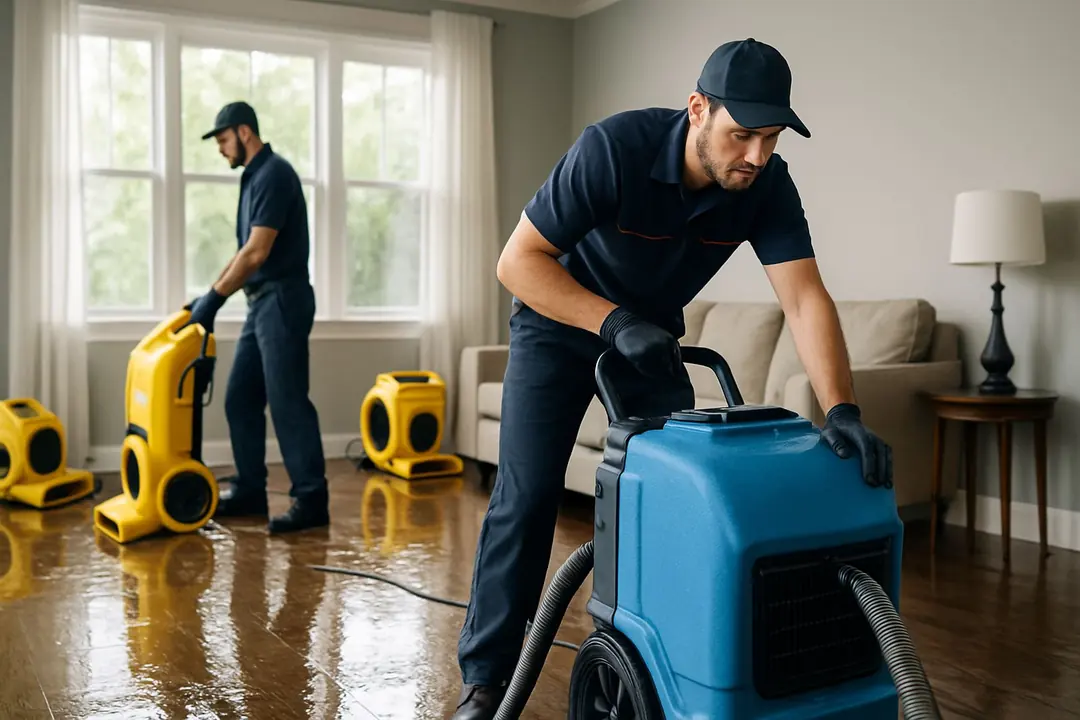
Water damage restoration services in Houston
Six kinds of work cover nearly every call. Water removal and extraction pulls standing water out of floors and cavities, and it also covers burst pipes, supply lines and appliance leaks. Flood damage restoration handles storm water that came in from outside, and sewage cleanup handles backups. Ceiling water damage covers roof leaks and wet ceilings, and commercial water damage covers shops and offices and small multi-family buildings. Water mitigation and structural drying finishes every job with air movers and dehumidifiers, plus daily readings. Each service has its own page with the method and what sets the price.
Water removal and extraction
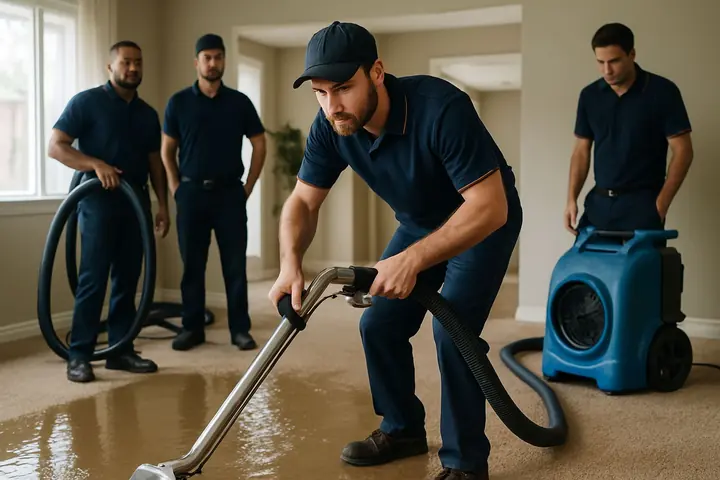
Water removal and extraction in Houston, TX means pulling standing water out of floors, carpet and wall cavities before it soaks into the structure.
Flood damage restoration
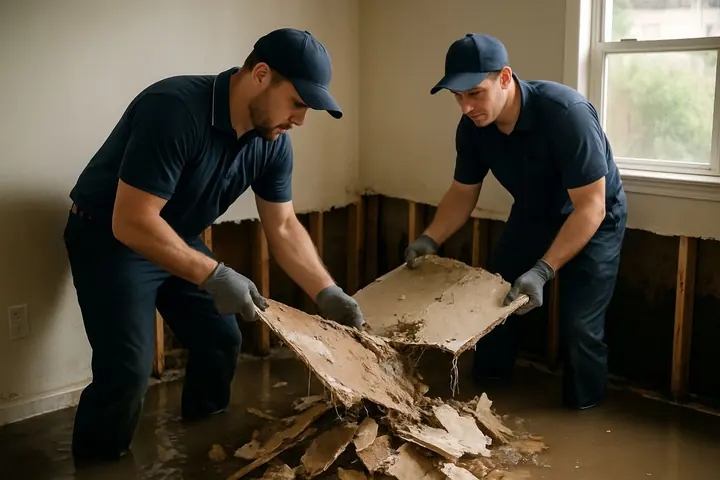
Flood damage restoration in Houston, TX starts from one fact: floodwater is contaminated, so soaked drywall, insulation and carpet come out instead of being dried.
Sewage cleanup
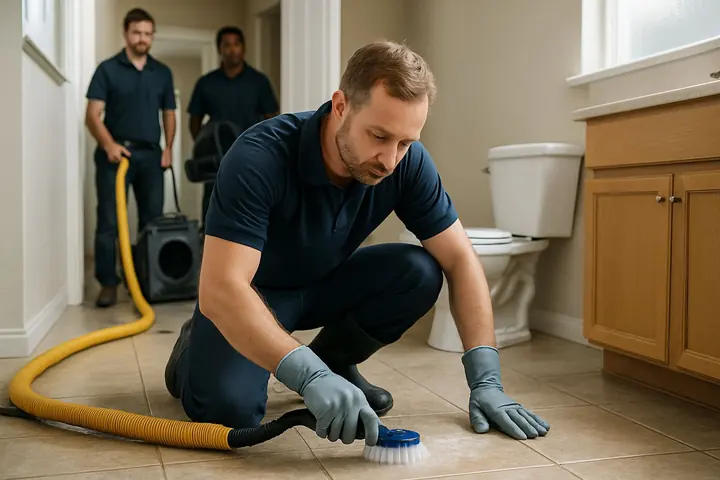
Sewage cleanup in Houston, TX turns on who owns the pipe: sewer water at the street cleanout is the City's to clear, and a dry cleanout means a private-line blockage.
Ceiling water damage
Ceiling water damage in Houston, TX usually starts above the ceiling, in the roof, the attic plumbing or an AC drain line, and shows as a stain or sag below.
Commercial water damage
Commercial water damage in Houston, TX gets the same extraction and drying as a house, scheduled so a shop or office loses as few trading hours as possible.
Water mitigation
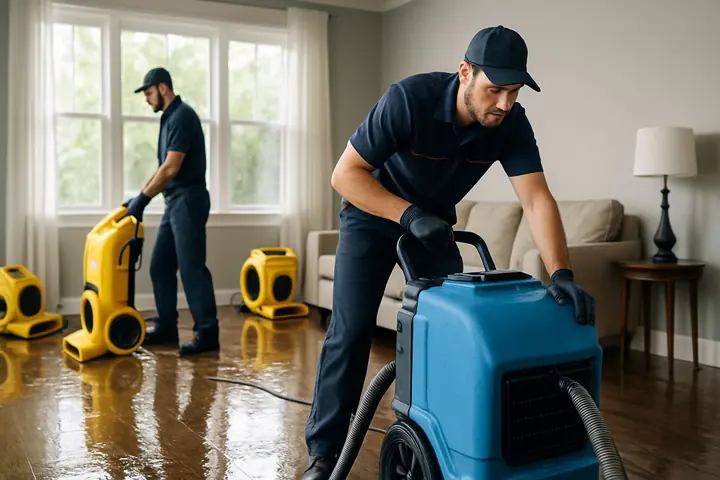
Water mitigation in Houston, TX is the drying stage that stops a wet house from getting worse, with air movers and dehumidifiers plus daily moisture readings.
What happens in the first hour after you call
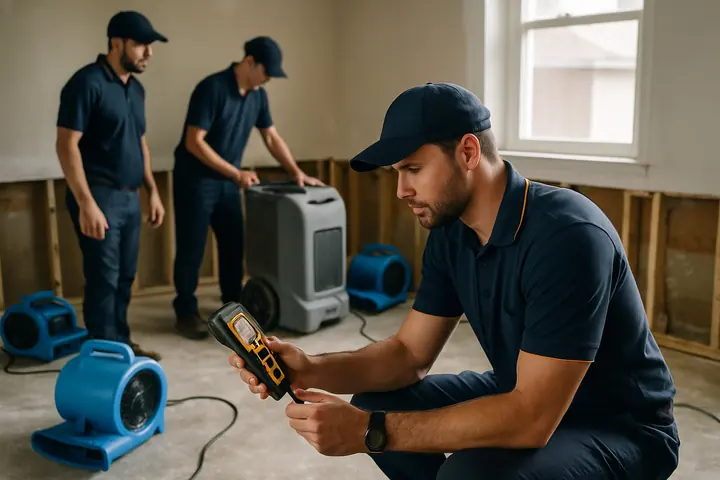
The dispatcher asks where the water is, whether it is still running, how clean it looks and how many rooms it reached. If the shutoff valve has not been found, the dispatcher stays on the line until it is closed. A crew is sent with extraction units, air movers and dehumidifiers on the truck, so nothing waits for a second trip. On arrival the technician maps the wet area with a moisture meter, photographs it before anything is moved, and writes the estimate on site. Free estimates mean the estimate costs nothing; no price is given over the phone, because nobody can see inside a wall from a phone.

Why Houston houses take on water so easily
Most Houston houses are single story and built on a concrete slab over expansive clay, so water from a leak or a street flood spreads across one continuous floor and wicks into the bottom of every wall it touches. Bush Intercontinental Airport averages 51.84 inches of rain a year, and the city has no zoning, so older bungalows, new townhomes and warehouses share the same drainage. Water that comes in from outside is treated as contaminated, and the flood damage restoration page explains why.
Where the crews work around Houston
Houston is the base, with 80 ZIP codes covered inside the city. Pasadena, Missouri City and Pearland each have a page of their own because the water behaves differently there. Bellaire, Stafford, South Houston, Galena Park and Fresno are served from the same base and take calls at the same number. The Houston page lists every ZIP code and the neighborhoods around them.
What Houston customers say
-
A pipe leak reached more of the room than I first realized. The team showed me the areas they were concerned about and explained the cleanup without rushing through it.
-
My biggest worry after the water damage was moisture being left behind. The team explained the drying steps and what they were checking. I appreciated that they didn't just tell me everything was fine and move on.
-
The water was gone, but I was still worried about what had soaked into the walls. The crew walked me through the drying process and checked the areas I kept asking about. That patience meant a lot.
Water damage restoration questions Houston homeowners ask
Does homeowners insurance cover water damage in Texas?
Usually for sudden and accidental damage, such as a burst pipe or a broken hose. It does not usually cover floodwater rising from outside or a slow leak, and flood needs a separate policy. The insurance guide explains each case, and the adjuster makes the final call.
How long does water damage restoration take?
Structural drying commonly takes three to five days. Thick framing and wall cavities take longer, and the moisture readings decide when the equipment leaves.
How fast can a crew reach my part of Houston?
A crew is dispatched the same day for active water. Arrival time depends on traffic and where the nearest crew is, so say on the phone that water is still running.
Is it safe to stay in a flooded house?
Not until the power to the wet area is off and the type of water is known. Floodwater and sewage carry bacteria, and wet floors hide electrical hazards, so keep children and pets out until a crew has looked.