Storm Damage and Roof Leak Cleanup in Houston, TX
Houston Water Damage 24/7 handles storm damage cleanup in Houston, TX, when wind, hail or a fallen branch opens a roof and rain gets into the attic, ceilings and walls. The first job is stopping more water from coming in, with a tarp or temporary patch, and the second is drying everything the rain reached before the ceiling drywall fails. Storm damage often shows up days after the storm, as a stain that spreads or a ceiling that starts to sag.
Rather type than talk? Request a callback online
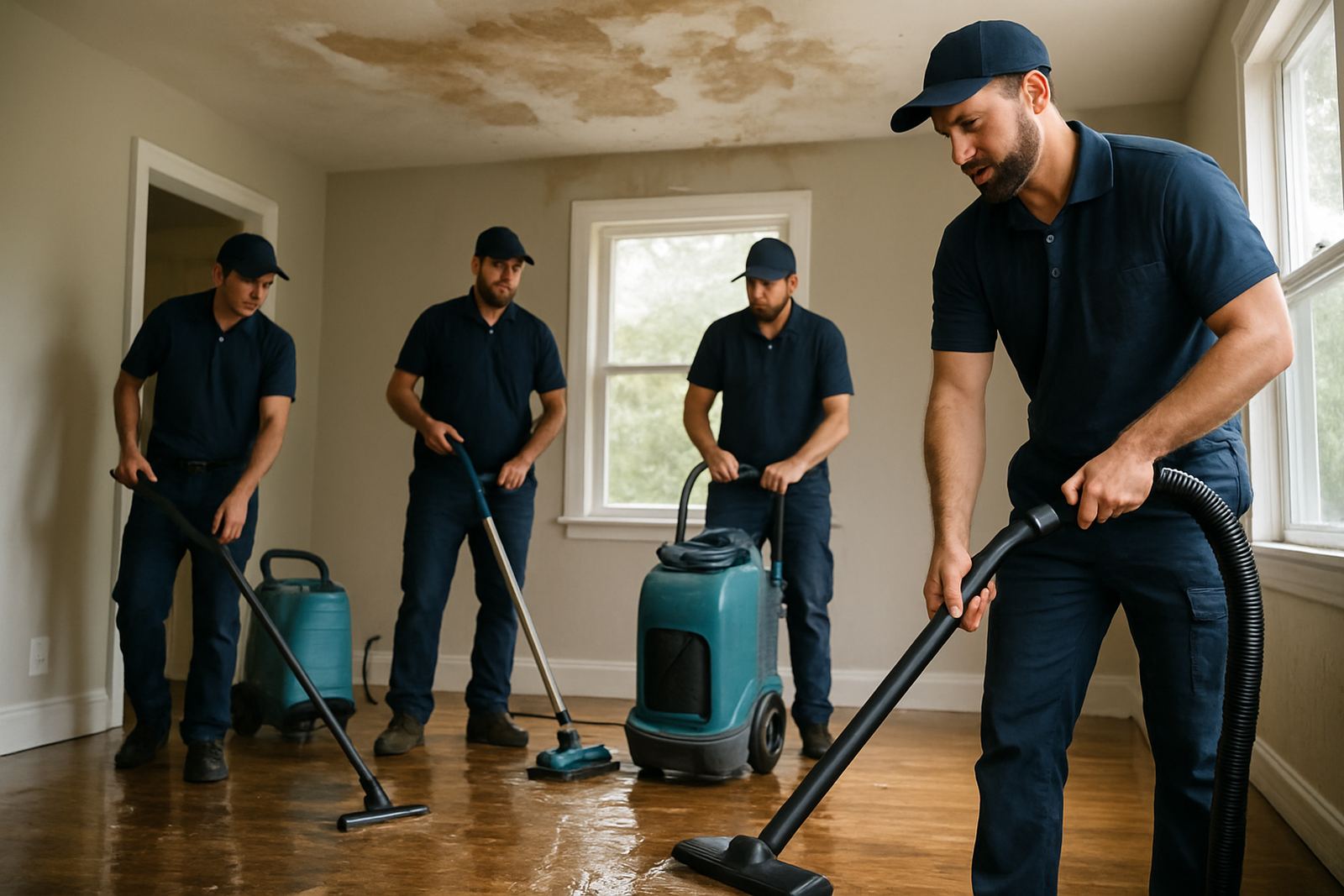
How storm damage cleanup works in Houston
When the crew arrives the roof opening is covered with a tarp or a temporary patch so the drying is not undone by the next shower. The attic is inspected with a moisture meter and a light: wet blown-in or batt insulation is removed, because it holds water against the ceiling drywall and the framing, and the framing underneath is dried in place.
Below the attic, stained or sagging ceiling drywall is checked. Drywall that has bowed comes down before it falls; drywall that is wet but flat can often be dried. Walls that the water ran down are checked to the floor. Air movers and dehumidifiers run until the framing and remaining drywall test dry, and the roofer does the permanent repair once it is.
Storm damage insurance claims in Houston
Wind and hail damage to the roof, and the interior water damage that follows, are covered by most homeowners policies. Rising water from outside is a separate flood matter. Adjusters want the date of the storm, photos of the roof damage and the interior, and a list of what was removed.
We photograph the roof opening, the attic and every affected ceiling and wall before removal, and give you the moisture log. Keep the pieces of shingle or the branch if you can; adjusters sometimes ask.
What affects the price of storm damage cleanup
Emergency tarping is priced separately from the interior drying. The interior estimate depends on the following.
How much rain got in and for how long
A leak found the next morning is a different job from one that ran through a week of storms.
Insulation and ceilings
Wet insulation is removed by the square foot. Sagging drywall comes down; flat wet drywall is dried.
Walls and floors below
Water that ran down interior walls or pooled on floors adds rooms to the drying plan.
Access
Steep roofs, high ceilings and cramped attics slow the work.
Storm and roof leak cleanup questions from Houston homeowners
Do you repair the roof?
We stop the water with a tarp or temporary patch and dry the inside. The permanent roof repair is done by a roofer once the drying is finished.
A ceiling stain appeared days after the storm. Is it still wet?
Probably. Stains grow as water spreads through the drywall paper, and insulation above can stay wet for a long time. A moisture reading answers it in a minute, and the estimate visit is free.
Should I poke a hole in a sagging ceiling?
If water is pooling above a bulge, a small hole with a bucket underneath relieves the weight and can stop the whole sheet from coming down. Keep clear of it otherwise and turn off any light fixture in that area at the breaker.
Can wet attic insulation be dried?
Batt insulation sometimes, blown-in almost never. Wet insulation is removed and replaced after the framing is dry.
Other water damage services in Houston
Most jobs touch more than one of these. The same crew handles all of them.
Emergency water extraction
Standing water pumped and vacuumed out of floors, carpet and cavities the same day, before it soaks into the structure.
Flood cleanup
Pump-out, removal of contaminated materials, disinfection and drying after storm water or groundwater came inside.
Burst pipe and leak cleanup
Cleanup and drying after a supply line, water heater, appliance hose or slab leak let water loose inside the house.
Structural drying and dehumidification
Commercial air movers and dehumidifiers with daily moisture readings until walls, floors and framing are dry to the meter.
Sewage backup cleanup
Removal, disinfection and drying after a sewer line backup or toilet overflow, done with protective gear and proper disposal.
Mold prevention after water damage
Antimicrobial treatment, complete drying and verification so a water event does not become a mold problem behind the walls.
Storm and roof leak cleanup across the Houston area
Available in every city we serve. Response time depends on your distance from the crew at the moment you call.
Every hour the water sits, the repair grows
Drywall, subfloor and cabinets soak up water fast. One call gets a crew on the way and the drying started today.